Slab moisture, flatness and floor prep in Port St. Lucie, FL
Why concrete slab moisture and flatness matter for LVP, laminate, tile and wood floors in Port St. Lucie, FL, and what good floor prep looks like.
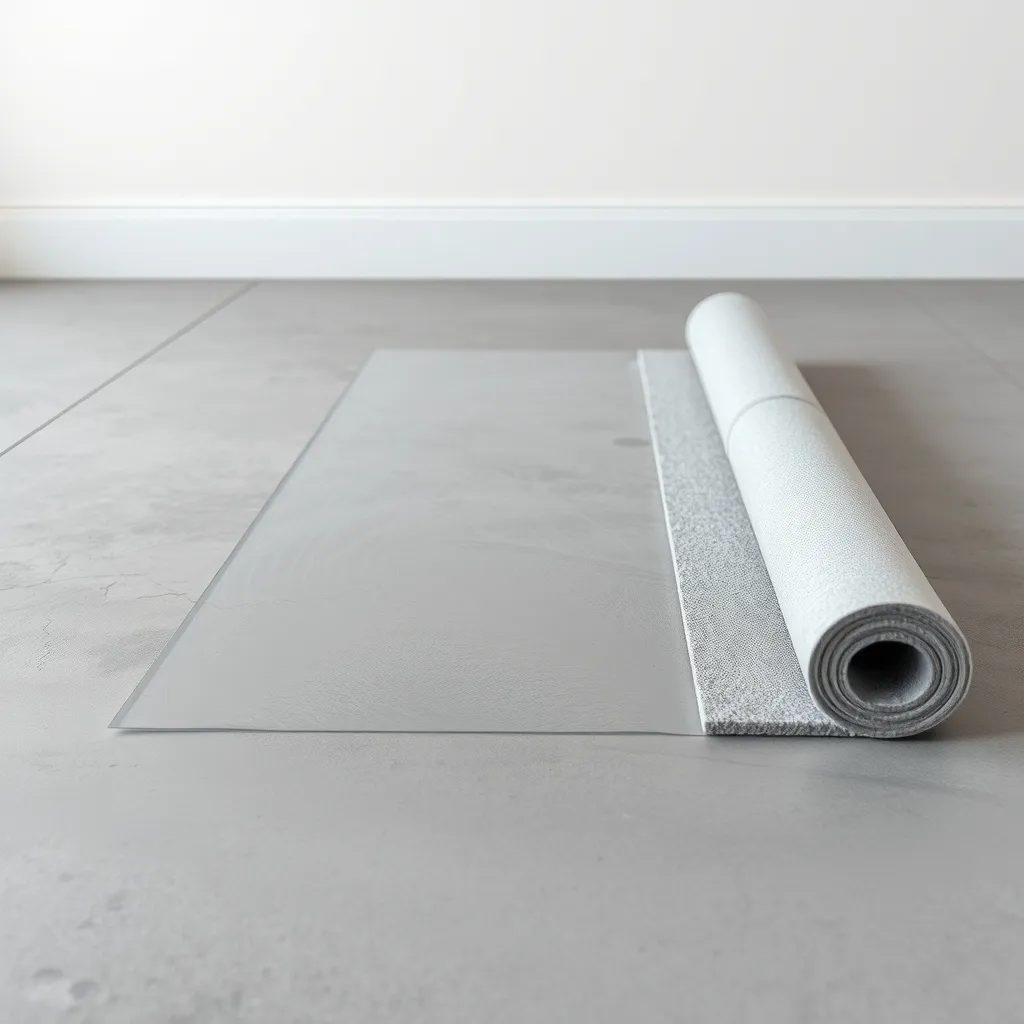
Almost every home on the Treasure Coast is built on a concrete slab. The slab is the base for your new floor, and most flooring problems that show up months later start there. Prep is the part of the job you never see, which is why it is the easiest part to skip.
Moisture in the slab
Concrete is porous. It pulls moisture up from the ground below and gives it off into the room. In Florida, with a high water table and humid air, a slab can carry more moisture than people expect. Under a floor that traps it, that moisture can cause planks to cup or gap, adhesives to fail and mold to grow underneath.
Many flooring makers set a moisture limit and require a test before installation. Two common tests are a calcium chloride test, which measures how much moisture comes off the surface, and a relative humidity probe placed in a small hole drilled into the slab. Ask the installer whether they test and what the product's limit is. Skipping a required test can affect the warranty.
Vapor barriers
A vapor barrier is a layer that slows moisture coming up from the slab. Under laminate and some floating floors, it is often a plastic sheet with the seams overlapped and taped, or an underlayment with a barrier built in. Under glue down floors, some adhesives act as the barrier. Many LVP products have a pad attached, and the maker may say what can and cannot go under it. The right answer depends on the product, so follow its instructions.
Flatness
No slab is perfectly flat. Floating floors and large tiles need it flatter than most slabs are when the old floor comes up. Many flooring makers set a limit, often something like 3/16 of an inch over 10 feet, but the exact number depends on the product. A floor laid over a dip feels hollow or bouncy, and the click joints can break over time. A high spot can make a plank rock.
Installers fix low spots with a patching or self leveling compound and grind down high spots. Old thinset, glue and paint drips also come off at this stage.
Cracks
Most slabs have small shrinkage cracks, and they are usually not a structural problem. A crack that is wide, growing or has one side higher than the other is different and is worth having looked at before a new floor covers it. Under tile, an installer may use a crack isolation membrane.
Doors, trim and transitions
Prep also covers the edges. Door jambs and casing are undercut so the floor slides under them, the expansion gap at the walls is planned so trim will cover it, and transitions are chosen for each doorway so the heights meet cleanly.
Permits, licenses and who is responsible
Many cities and counties do not require a building permit to replace floor covering alone, but rules differ and some jobs include other work that does, such as moving a toilet or changing a doorway. Confirm with your city or county building department. The installer is responsible for its own work and any permits the job needs.
Florida does not require a state contractor license for flooring work on its own. Florida Statute 489.117(4)(a) leaves flooring out of the trades that need state certification or registration. That is not the whole story, because counties and cities can have their own requirements, such as a local business tax receipt or a local license, and a job that touches plumbing or electrical work brings in other rules. Local rules can vary, so confirm with your city or county. Either way, ask any installer for proof of insurance.
For what this prep adds to a quote, see the flooring cost guide.
Questions homeowners ask
Does my new construction slab need a moisture test?
It is worth asking about. New concrete can still be drying for months after it is poured, and many flooring makers require a test regardless of the age of the home.
What does a vapor barrier do?
It slows the moisture that rises from the concrete so it does not get trapped under the floor. Whether you need a separate one depends on the product, so follow the maker's instructions.
How flat does the slab need to be?
It depends on the product. Many makers set a limit around 3/16 of an inch over 10 feet. Large tiles and floating floors are the most sensitive to dips and high spots.
Related services
- Replace Carpet
- LVP & Laminate
- Tile Installation
- Old Tile Removal
- Engineered Wood
- Rentals & Flips
- Condo Flooring
- Flooring Cost Guide
We refer homeowners in Tradition, Port St. Lucie West, Fort Pierce, Stuart, Jensen Beach, Palm City, Vero Beach, and nearby neighborhoods.